| Quote: |

| Quote: |




| Quote: |
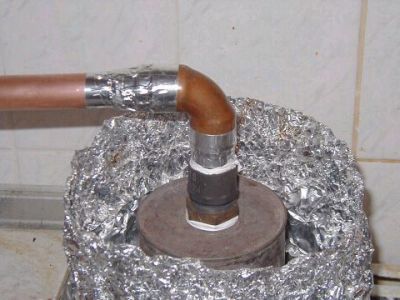
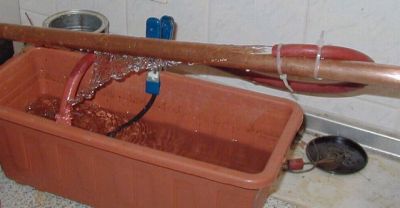
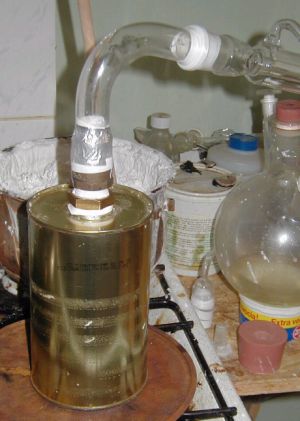
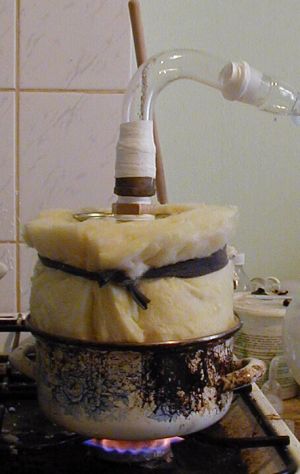
 . Then I decided I wasn't giving it enough heat so bought a new, full propane cylinder and tried it again. This
time I got a few drops of benzene - still a failure. The 4th time I dried the paste mixture of Na benzoate/NaOH/H2O for 2 hours at 100C in an oven
and then ground it to a powder in a mortar & pestle. I then placed half of it in the 25x200mm test tube, keeping it dry with a rubber stopper
until ready for use. Then I really put the heat to it until I could see the NaOH melting and reacting with the Na benzoate. This was effective and
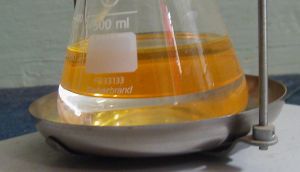
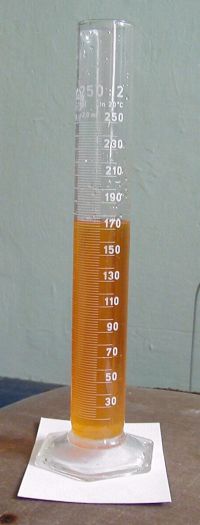
all benzoate reacted leaving just the NaOH, (Na2CO3?), and patches of carbon black. The benzene looked to be in good yield but has an orange color. Before I'm done the residue left in the tube is
black. So I'm carbonizing some of the benzene and/or the generated Na2CO3? Today for the first time I saw a green tint to the powder as it was
heated. I think this is most likely a Ni or Cu compound coming in as an artifact from the kitchen spoon I use in making up the powder matrix. So it
is very interesting and I thought some members would also find it so. I'll post a 2nd picture showing the receiving pot with the orange colored
benzene. It's just when I looked in my CRC no color
was given for biphenyl. Thanks for the confirmation.
. Then I decided I wasn't giving it enough heat so bought a new, full propane cylinder and tried it again. This
time I got a few drops of benzene - still a failure. The 4th time I dried the paste mixture of Na benzoate/NaOH/H2O for 2 hours at 100C in an oven
and then ground it to a powder in a mortar & pestle. I then placed half of it in the 25x200mm test tube, keeping it dry with a rubber stopper
until ready for use. Then I really put the heat to it until I could see the NaOH melting and reacting with the Na benzoate. This was effective and
all benzoate reacted leaving just the NaOH, (Na2CO3?), and patches of carbon black. The benzene looked to be in good yield but has an orange color. Before I'm done the residue left in the tube is
black. So I'm carbonizing some of the benzene and/or the generated Na2CO3? Today for the first time I saw a green tint to the powder as it was
heated. I think this is most likely a Ni or Cu compound coming in as an artifact from the kitchen spoon I use in making up the powder matrix. So it
is very interesting and I thought some members would also find it so. I'll post a 2nd picture showing the receiving pot with the orange colored
benzene. It's just when I looked in my CRC no color
was given for biphenyl. Thanks for the confirmation. 
| Quote: |
| Quote: |
| Quote: |
The disproportionation of toluene is also facile Reppe's methods are available to those who can acquire or produce the carbonyl
catalysts If one has industrial type facilities one could probably distill coal
and fractionate the distillate if one wanted to As far as from
dichlorobenzene, this article describes a means:| Quote: |
| Quote: |
| Quote: |
| Quote: |
| Quote: |
... but if I come
across one I will gladly post it on here Although I think you may be right about
the cyclotrimerisation occuring in the vapor phase.| Quote: |
| Quote: |
