| Pages:
1
2 |
Endimion17
International Hazard

Posts: 1468
Registered: 17-7-2011
Location: shores of a solar sea
Member Is Offline
Mood: speeding through time at the rate of 1 second per second
|
|
I don't know if you've seen this...
<iframe sandbox width="420" height="315" src="http://www.youtube.com/embed/n4ktAaGAyLc" frameborder="0" allowfullscreen></iframe>
It's beautiful and it shows how tough itis to create an explosion. These are deflagrations. Detonations of ammonia-air mixtures are highly unlikely.
|
|
|
S.C. Wack
bibliomaster
Posts: 2419
Registered: 7-5-2004
Location: Cornworld, Central USA
Member Is Offline
Mood: Enhanced
|
|
While 540,000 lbs of NH4NO3 have been reported, the pictures of what remains of the plant seem to indicate a large amount of something with less power than ammonium nitrate...270 tons
of which should have pulverized the plant to shrapnel and left a notable crater...
|
|
|
hyfalcon
International Hazard
Posts: 1003
Registered: 29-3-2012
Member Is Offline
Mood: No Mood
|
|
Not exactly. All of it would have to come to the decomposition temp at once. I'm sure a sizable quantity reached that temp but not all of it at the
same time.
|
|
|
Endimion17
International Hazard
Posts: 1468
Registered: 17-7-2011
Location: shores of a solar sea
Member Is Offline
Mood: speeding through time at the rate of 1 second per second
|
|
Here's a new video. It seems there was really a ton of stupid people around the plant.
<iframe sandbox width="420" height="315" src="http://www.youtube.com/embed/JTVUA-jJ11I" frameborder="0" allowfullscreen></iframe>
This might be from the other side, and you can see there were several bursts in a very short time, probably resulting from pressure tank ruptures
induced by the main blast.
|
|
|
S.C. Wack
bibliomaster
Posts: 2419
Registered: 7-5-2004
Location: Cornworld, Central USA
Member Is Offline
Mood: Enhanced
|
|
The best crappy picture I've seen now does perhaps indicate a notable (50') crater at the south end of the building. IIRC we'd've been told the depth and diameter by now, Back In The Old Days.
|
|
|
Dr.Bob
International Hazard
Posts: 2659
Registered: 26-1-2011
Location: USA - NC
Member Is Offline
Mood: No Mood
|
|
It seems likely that the fire over-pressured and over-heated the liquid ammonia tanks, at least one of which then failed catastrophically, creating a
cloud of flammable vapors which likely reacted with the hot ammonium nitrate to create a larger deflagration/explosion, which likely initiated the
other tanks of ammonium nitrate to explode. All of this might have happened in a very short time, creating what appears to be one large explosion,
but is likely several explosions of growing size. Getting the exact order of which went first will take a while, but might be determined eventually.
But certainly there was enough ammonium nitrate (100+ tons) and anhydrous ammonia (10,000's of gallons) to create a large explosion under the worst
case scenario. I counted at least 3 silos of AN and 3 or more large tanks of liquid ammonia. Anhydrous likely does mean liquid ammonia. And
ammonium nitrate slurry in water is used in blasting, so while the solution may be safe, ammonium nitrate as a slurry of prills in water can explode
under the right conditions, especially if a fuel is present.
The combination of ammonium nitrate and ammonia would certainly be able to create an explosion, as for each ammonia that is oxidized, you get 3
molecules of water and 0.5 N2, so that creates a very large amount of gas, and with AN, it would be:
NH3 + NH4NO3 ---> 1.5 N2 + 3 H20 + 1/2 H2
So from a liquid and a solid, you generate roughly 5 moles of a gas, plus a large amount of heat. That would certainly be enough gas to create a
large explosion.
|
|
|
DraconicAcid
International Hazard
Posts: 4278
Registered: 1-2-2013
Location: The tiniest college campus ever....
Member Is Offline
Mood: Semi-victorious.
|
|
I think it would be more likely to give 2 NH3 + 3 NH4NO3 --> 4 N2 + 9 H2O
My mind rebels at seeing hydrogen generated from a conflagration.
<!-- bfesser_edit_tag -->[<a href="u2u.php?action=send&username=bfesser">bfesser</a>: removed
unnecessary quoting]
[Edited on 7/8/13 by bfesser]
Please remember: "Filtrate" is not a verb.
Write up your lab reports the way your instructor wants them, not the way your ex-instructor wants them.
|
|
|
Magpie
lab constructor
Posts: 5939
Registered: 1-11-2003
Location: USA
Member Is Offline
Mood: Chemistry: the subtle science.
|
|
Just looking at the satelite picture I conclude the following:
1. There was no manufacturing, or likely even blending of ferilizers (not enough tanks, pipes, pumps, etc). The "plant" looks to be only for storage
and distribution.
2. There are many smaller anhydrous ammonia tanks likely for use on location in a farmer's field.
3. There are quite a few larger anhydrous ammonia tanks for truck transport on the highway to other distributors.
4. The big gray silos look like they are for storage and distribution of dry particle fertilizers, likely NH4NO3 prills. One silo looks like it can
receive product from the nearby railroad.
The large circular structure with all the small white rectangles neatly arrayed in it puzzles me. Anybody know what that is?
Why do we think that anhydrous ammonia had anything to do with the explosion other than through over-pressurization of the tanks? Wouldn't
over-heated NH4NO3 be enough to cause the explosion in and of itself?
NH4NO3 + heat --> N2O + 2H2O (Wiki)
The single most important condition for a successful synthesis is good mixing - Nicodem
|
|
|
unionised
International Hazard
Posts: 5104
Registered: 1-11-2003
Location: UK
Member Is Offline
Mood: No Mood
|
|
A few of my colleagues and I were talking about this. We came to the conclusion that the coverage of the ammonia was a bit like them saying "This
plant with 250 tones of explosives and a lithium battery exploded- but, because we have heard they use lithium to make meth it must be devilishly
dangerous so we will blame it."
(And these are my colleagues who deal with risk assessments for hazardous processes and me, whose jobs include looking at what should or shouldn't be
built near such factories)
Ammonium nitrate factories blow up from time to time- usually due to a fire- occasionally due to outright stupidity.
http://en.wikipedia.org/wiki/Ammonium_nitrate_disasters
|
|
|
S.C. Wack
bibliomaster
Posts: 2419
Registered: 7-5-2004
Location: Cornworld, Central USA
Member Is Offline
Mood: Enhanced
|
|
I still have not seen a better photo of the actual blast site than the one I posted. Other photos including aerials seem to be rather deliberately
just off to one side or low-res. Don't hear much except for the paramedic who has been silenced by prosecution after talking, after being fired
immediately after talking...It's said that the manager of the nitrate operation was a fireman and quite aware of what they including 2 civilians were
getting in to, and all of them were found within yards of the crater. The wisdom of going anywhere near it much less putting water on it seems yet to
come up. IIRC people predicted the brick wall for the CSB from the beginning. I wonder if they actually have access to the US Marshals.
-------------------------------------------
WACO, Texas May 22, 2013 (AP)
Federal agents and the state fire marshal have effectively barred a federal safety panel from the site of a Texas fertilizer plant blast that killed
15 people and injured about 200 others, hampering its investigation, the panel's chairman said.
In a May 17 letter to Sen. Barbara Boxer, U.S. Chemical Safety Board Chairman Rafael Moure-Eraso asked the California Democrat to help the board
obtain evidence under control of the Bureau of Alcohol, Tobacco, Firearms and Explosives that he contends is essential to the board's investigation,
the Waco Tribune-Herald and Austin American-Statesman reported.
"To date, the CSB has experienced significant obstacles that potentially compromise and delay our ability to complete the 'comprehensive
investigation' that you have rightly demanded, and that we would very much like to produce," he wrote to Boxer. The chairwoman of the Senate Committee
on Environment and Public Works has said she planned to hold hearings into the April 17 West Fertilizer explosion.
A criminal investigation "comes with certain sensitivities. You need to keep it to law enforcement only," Robert Champion, ATF special agent in charge
of the investigation told the American-Statesman. He also said the decision to bar the CSB from the site was made by the State Fire Marshal's Office.
Fire Marshal's Office spokeswoman Rachel Moreno said the CSB was kept out because criminal investigators were executing search warrants.
"We have to protect evidence," she told the American-Statesman. "We need to have one report, one set of interviews; it all has to be clear cut."
Messages left by The Associated Press with ATF and the State Fire Marshal's Office were not returned Tuesday night. However, a Boxer spokeswoman said
the senator had asked the agencies to respond as quickly as possible to her concerns regarding the issues raised in the letter.
In an April 30 statement, Boxer said she "cannot rest until we get to the bottom of what caused the disaster" in West and that she wants to make sure
such facilities are complying with chemical safety laws.
In his letter, Moure-Eraso said the board sent 18 investigators and other experts to West within 24 hours of the blast. At the same time, ATF "assumed
essential exclusive control of the incident site" with the State Fire Marshal's Office, he wrote.
"These criminal investigators have exercised exclusive control of the site for a full one-month period ... and have altered or removed almost all
relevant physical evidence at the site," he wrote.
ATF and the State Fire Marshal's Office "consistently expressed the position that CSB was not permitted to conduct separate interviews, prepare expert
analysis or author its own independent report," he wrote. ATF and the state fire marshal "state that because in their view this was exclusively a
criminal investigation, there could be only one version of what occurred and one report."
On May 16, representatives of the State Fire Marshal's Office announced that the joint criminal investigation left the cause of a fire precipitating
the blast as "undetermined."
Investigators narrowed the number of possible causes to three: a problem with one of the plant's electrical systems, a battery-powered golf cart and a
criminal act. However, they could not say with certainty what caused the fire that ignited stored ammonium nitrate, said Kelly Kistner, the assistant
state fire marshal.
|
|
|
subsecret
Hazard to Others
Posts: 424
Registered: 8-6-2013
Location: NW SC, USA
Member Is Offline
Mood: Human Sadness - Julian Casablancas & the Voidz
|
|
My family is from Texas...more specifically the West area. 2 family houses were damaged. One of them had asbestos insulation and apparently the
ceiling caved in. 
Sorry if this is off topic...
Fear is what you get when caution wasn't enough.
|
|
|
bfesser
Resident Wikipedian
Posts: 2114
Registered: 29-1-2008
Member Is Offline
Mood: No Mood
|
|
Not off topic at all.
<iframe sandbox width="560" height="315" src="//www.youtube-nocookie.com/embed/Ba8jTkRWiwI?rel=0" frameborder="0"
allowfullscreen></iframe>
USGS Event Summary, <strong><a href="http://comcat.cr.usgs.gov/earthquakes/eventpage/usb000g9yl#summary" target="_blank">M2.1 Explosion -
1km NNE of West, Texas</a></strong> <img src="../scipics/_ext.png" />
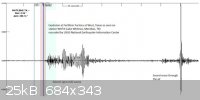 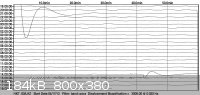
http://www.washingtonpost.com/blogs/capital-weather-gang/wp/...
http://www.scientificamerican.com/article.cfm?id=west-texas-...
http://en.wikipedia.org/wiki/West_Fertilizer_Company_explosi...
[Edited on 10.8.13 by bfesser]
|
|
|
vulture
Forum Gatekeeper
Posts: 3330
Registered: 25-5-2002
Location: France
Member Is Offline
Mood: No Mood
|
|
| Quote: |
Eyewitnesses likened the event to a nuclear bomb blast
|
This pisses me off to no end - sensationalism. Because everybody in that town has witnessed a nuclear blast before, right?
As for blaming the people in the videos for coming so close, they might not have been aware that it was a fertilizer plant. Secondly, even if they
knew, they probably didn't realize fertilizer is explosive. The question should be: Why was there an ammonium nitrate plant in a residential area?
One shouldn't accept or resort to the mutilation of science to appease the mentally impaired.
|
|
|
IrC
International Hazard
Posts: 2710
Registered: 7-3-2005
Location: Eureka
Member Is Offline
Mood: Discovering
|
|
"Why was there an ammonium nitrate plant in a residential area?"
I have no doubt in virtually every case of this the plant was already there. Developers wanting to profit from their land investments work at changing
zoning regulations and slowly urban sprawl surrounds these plant with houses. Long have I wondered about the sanity of those buying newly built houses
in these areas. I watched it in Phoenix for decades. Cannot imagine buying a house in a new subdivision a few blocks from a 1 million gallon petroleum
storage tank, itself surrounded by other giant tanks. Or a new trailer park near a Morton Thiokol plant. Is it madness or just stupidity? I get it,
both.
"Science is the belief in the ignorance of the experts" Richard Feynman
|
|
|
franklyn
International Hazard
Posts: 3026
Registered: 30-5-2006
Location: Da Big Apple
Member Is Offline
Mood: No Mood
|
|
Quote: Originally posted by vulture  | | Quote: |
Eyewitnesses likened the event to a nuclear bomb blast
|
This pisses me off to no end - sensationalism. Because everybody in that town has witnessed a nuclear blast, right ? |
No doubt they had , for why else would witnesses make that comparison. Experiencing a ' nuclear blast ' was common place for the weapon scientists
during above ground testing. There are many videos on youtube of this. You should know that high explosives in the amounts of this event have been
used in practical simulations of nuclear explosions , so the comparison is perfectly valid.
.
|
|
|
vulture
Forum Gatekeeper
Posts: 3330
Registered: 25-5-2002
Location: France
Member Is Offline
Mood: No Mood
|
|
| Quote: |
No doubt they had , for why else would witnesses make that comparison. Experiencing a ' nuclear blast ' was common place for the weapon scientists
during above ground testing. There are many videos on youtube of this. You should know that high explosives in the amounts of this event have been
used in practical simulations of nuclear explosions , so the comparison is perfectly valid.
|
They are hearsay witnesses, watching a video does not make you an eyewitness.
Yes, HE's have been used to simulate nuclear blasts, but in larger quantities and there is no electromagnetic spike - otherwise the witnesses would
have been blind.
One shouldn't accept or resort to the mutilation of science to appease the mentally impaired.
|
|
|
franklyn
International Hazard
Posts: 3026
Registered: 30-5-2006
Location: Da Big Apple
Member Is Offline
Mood: No Mood
|
|
http://www.youtube.com/embed/BlE1BdOAfVc
http://www.youtube.com/embed/paCUhiUxxIw
.
|
|
|
| Pages:
1
2 |



![[*]](images/xpblue/default_icon.gif)