NickBlackDIN
Harmless

Posts: 13
Registered: 10-5-2023
Member Is Offline
|
|
Purification of SiO2 with k2CO3 viable?
For a project I'm working on I basically want to separate all the elements from raw clay. And since it's not very mineral heavy (most of the minerals
are about 100ppm) means there's a lot of silica I have to extract, and I *think* I have found an easy solution to process large quantities (almost)
passively.
But I would like more knowledgeable brains to have a look to see if there's any blinding oversights I'm having.
The process:
Ideal step one: wash clay with acids to remove a good chunk of the non silicon particulates. And rinse well.
2) prepare a saturated aqueous solution of K2CO3
3) add the cleaned clay in the appropriate molar amount. (making sure I have an access of the K2CO3 solution)
4) heat the mixture to ~90*c (in the papers I skimmed they would go to about 150, but under pressure, I rather wait a bit longer than have a hot
pressurized caustic solution lol)
5) with stirring all the SiO2 should dissolve in about an hour.
5b) ideally capture the released CO2 gas, and store.
6) filter the solution, and let cool.
7) in that same, now filtered solution chill to as cold as I can get it without freezing, bubble the captured CO2 back through it, I will probably
have to add additional CO2 from a different source due to losses, but in a properly designed vessel I should be able to recover most of the SiO2 back
again, and have a solution of K2CO3 again as well.
8) filter, repeat.
With a well designed setup I think I can use this setup to extract quite large amounts of (fairly) pure SiO2.
And of course, can't use glassware for this, I'm thinking either stainless or cast iron.
Any glaring flaws that I'm not seeing?
|
|
|
teodor
International Hazard
Posts: 1169
Registered: 28-6-2019
Location: Netherlands
Member Is Offline
|
|
Does SiO2 exist in clay in a free form or as aluminium / other element complexes?
Soil analysis is one of the projects I’d like to start.
Looking in the book I found those methods
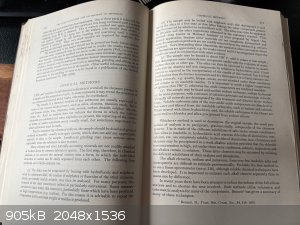
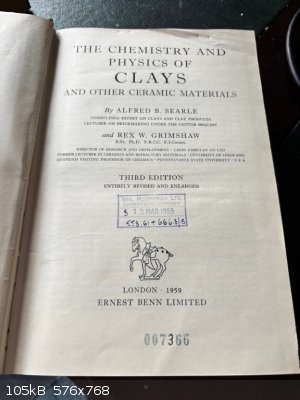
P.S. It would be nice to have a thread dedicated to soil / mineral analysis by chemical methods for novices like me. Some place to publish our clumsy
attempts. Of course, if somebody also plan to study those methods.
[Edited on 27-8-2025 by teodor]
|
|
|
NickBlackDIN
Harmless
Posts: 13
Registered: 10-5-2023
Member Is Offline
|
|
"Does SiO2 exist in clay in a free form or as aluminium / other element complexes?
"
As a complex I believe. But I 'hope' the strong base should be able to break up those bonds without too much struggle.
Thank you so much for the book reference! I'll read it after dinner, perhaps even get my own copy because I agree, would love to see a full discussion
on mineral extraction/analysis/etc of different soils.
Though I'm sure this forum would welcome you posting any attempts you may have, as I will my own attempts (along with posting on YouTube ofc)
|
|
|
teodor
International Hazard
Posts: 1169
Registered: 28-6-2019
Location: Netherlands
Member Is Offline
|
|
You can try your method with K2CO3 (but I would recommend to use NaOH or KOH and only metal dishes, any glass will be dissolved also, but at much
smaller rate because it is not pulverised) and I will try the method with molten NaOH. Then we can compare the results.
In reality clay is not a mineral composition, the property which classify soil as "clay" is the particles size (must be very small). This is the
result of formation mechanism but not the result of some particular minerals. So, we can have quite different results. If we are talking about clay
which is suitable e.g. for pottery making there is some requirements for composition also. Not any clay is suitable for this.
[Edited on 29-8-2025 by teodor]
|
|
|
unionised
International Hazard
Posts: 5142
Registered: 1-11-2003
Location: UK
Member Is Offline
Mood: No Mood
|
|
Don't use aluminium containers.
It's a metal but...
And, on a related not, if you dissolve your clay in K2O3 solution, you will need to separate the aluminium from the silica.
[Edited on 29-8-25 by unionised]
|
|
|
teodor
International Hazard
Posts: 1169
Registered: 28-6-2019
Location: Netherlands
Member Is Offline
|
|
Goog point, unionised. I was thinking only about stainless steel at the moment I was writing "metal".
[Edited on 29-8-2025 by teodor]
|
|
|
NickBlackDIN
Harmless
Posts: 13
Registered: 10-5-2023
Member Is Offline
|
|
Teodor:
Finally got round to reading the imaged pages, thank you for sharing that! Packed with useful information, I will definitely have to track that book
down! Thanks again!
Teodor post2:
When I say clay, I mean the kind that contains alumina that you can bake in an oven, though I probably should have specified that. (I was aware that
some places have what's called 'clay' but will just crumble if you try to bake it)
To my (limited) knowledge clay of my kind does form complex structures, but, I may be wrong (which is just all the better for me.
On a side note, since you seem very interested in this, for my area I use;
https://nsdnr.maps.arcgis.com/apps/webappviewer/index.html?i...
Then when I find some drill holes close to my location I then take the Reference Report number to find the actual report which gives much more
information on the kinds of minerals at different depths, what kind of soils they sampled for, etc.
Very useful stuff, might be fun for you to find something similar for your location!
Unionized:
I don't think aluminum contamination will be too much of an issue, since according to what I have found so far it dissolves in caustic conditions much
slower than silicon dioxide.
If course, afterwards you can always do a additional washing with HCl which should clean up any contaminations like that.
|
|
|
RU_KLO
Hazard to Others
Posts: 319
Registered: 12-10-2022
Location: Argentina
Member Is Offline
|
|
If you only want to purify SiO2, NaOH route is the best for amateur purposes as it dissolves the silicates and some metals like aluminium, but most
metals precipitates as hydroxides. Insolube salts are filtered.
Filtering and then adjusting ph with HCl, as SiO2 precipitates in neutral and acidic solutions and aluminium (or any other amphoteric salts stay
dissolved as chlorides)
Found this:
"Pure silicon oxide was produced in this study utilizing a sodium silicate solution made from Kankara clay as a precursor.
In a 500 mL Erlenmeyer flask, appropriate amounts of each clay (raw, thermally treated clay, and leached clay) were reacted with 3M NaOH solution. The
flask was heated to 200°C and stirred continuously for 3 hours on a magnetic stirring hot plate connected to a reflux condenser.
The solution was filtered to yield sodium silicate solution, which was then
precipitated with 3M HCl while constantly stirring to produce a gelly-like white substance. The gel was aged for 18 hours, then washed with de-ionized
water several times before being dried at 80°C for 12 hours to get pure white silica particles, which were subsequently described."
SYNTHESIS AND CHARACTERIZATION OF PURE AMORPHOUS SILICON OXIDE FROM TREATED KAOLINITIC CLAY USING CHEMICAL EXTRACTION
Sunday Gbenga Borisade1 , Seun Samuel Owoeye2 , Aderonke Ayeni
https://journal.uctm.edu/node/j2024-3/JCTM_2024_59_15_23-121...
other worth reading:
How to analyze clay; practical methods for practical men
by Ashby, Holdon M., 1875-
(old but some information - uses acid procedure- SiO2 is left behind. I dont think this is a good method - if you want to get the purest SiO2, because
there may be some insoluble salts that the acid does not attack and will be kept with the SiO2 on filtering)
Attachment: how to analyze clay .pdf (1.7MB)
This file has been downloaded 97 times
Go SAFE, because stupidity and bad Luck exist.
|
|
|
clearly_not_atara
International Hazard
Posts: 2926
Registered: 3-11-2013
Member Is Offline
Mood: Big
|
|
I think that if you want to try dissolving silica selectively, you should consider Na2CO3 or NaOH in ethylene glycol at around 150 C. Basic ethylene
glycol and silica will form the anion Si(OEtOH)5- whereas I believe alumina is always insoluble in ethylene glycol because the
Al3+ cation is a weaker acid than the Si4+. This would allow you to separate silica from alumina and you might be able to hydrolyze, filter and reuse
the EG.
Alternatively, you could treat the clay with concentrated hydrochloric acid, which will dissolve alumina (HCl is better than other acids for this, and
concentrated acid reacts much faster than dilute), leaving behind silica. An advantage of this method is that you can use ordinary glassware with no
concern about damaging it. Only a few metal oxides won't dissolve.
|
|
|



![[*]](images/xpblue/default_icon.gif)


