rowow
Harmless

Posts: 6
Registered: 25-8-2024
Member Is Offline
Mood: No Mood
|
|
Dirt cheap open source ion exchange membrane recipe
https://www.youtube.com/watch?v=c3tNXDlgE2M
ion exchange membrane resin from water softeners
use a spice/grain grinder to turn into a powder
mix 1:1 volume ratio of the powder with pvc cement
apply onto a surface
have fun. Check the video for more details.
|
|
|
Varungh
Hazard to Self
Posts: 70
Registered: 23-6-2025
Location: India
Member Is Offline
Mood: Bad mood
|
|
And what benefits does it have over using fiberglass? I had some fiberglass i used for a sulfuric acid from NaHSO4 cell. It ran perfectly with nearly
no mixing (i boiled the annode solution to dryness and there was nearly no residual salt)
|
|
|
Hexabromobenzene
Hazard to Others
Posts: 262
Registered: 27-4-2021
Member Is Offline
|
|
I have a couple of notes on these membranes. Heterogeneous membranes made this way have been known for many years, since the 1980s. They are typically
made by molding polyethylene and ion-exchange resin. 30:70 (plastic, ion-exchange resin, respectively).
The conductivity is quite high even comparable to Nafion if you apply a thin layer. I encountered the following problems:
I tried making from polystyrene. When wet, it disintegrated into powder. Resin expands when wet, and this will destroy your membrane. That's probably
why they were made out of polyethylene. Even polypropylene probably wouldn't work.
Molten polyethylene is very viscous. I couldn't fuse it with paraffin. Perhaps I ran out of time.
I think the membranes should be made this way. Make a suspension of ion-exchange resin in a polyethylene-kerosene alloy. If you dry the alloy at
temperatures above 100 degrees Celsius, you'll end up with a solid plastic, not a porous sponge, as the kerosene will evaporate from the liquid alloy.
You can also fuse polyethylene with mineral oil, then soak it in kerosene and heat it as described above.
The composite itself will likely be very brittle. However, applying the composition to polypropylene fabric can help. The key is to choose the right
temperature so that the alloy doesn't dissolve the fabric but the kerosene evaporates.
For many syntheses, it turns out that an anion-exchange resin is much more useful than a cation-exchange resin. But I only have an cation-exchange
resin.
[Edited on 7-2-2026 by Hexabromobenzene]
|
|
|
Hexabromobenzene
Hazard to Others
Posts: 262
Registered: 27-4-2021
Member Is Offline
|
|
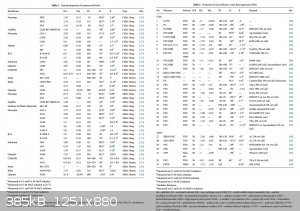
Here are articles dedicated to these membranes. Please note that they are made from polyethylene for a reason. Apparently there is a serious reason
https://pmc.ncbi.nlm.nih.gov/articles/PMC6950762/
Here is a great article reviewing the data
https://iopscience.iop.org/article/10.1088/2053-1591/aa5cd4/...
[Edited on 7-2-2026 by Hexabromobenzene]
|
|
|



![[*]](images/xpblue/default_icon.gif)


