4-nitro-1-naphthylamine
This is the coolest introduction of -NH2 group into aromatic molecule I have ever done. It works on 1-nitronaphthalene where second aromatic ring
activates the reactivity. I did not find that it works on benzene ring and here the preparation of 4-nitroaniline is difficult and requires a lot of
steps. Nitrobenzene -> aniline -> acetanilide -> 4-nitroacetanilide -> 4-nitroaniline.
Here the reaction is one step 1-nitronaphthalene -> 4-nitro-1-naphtylamine.
Maybe it also works on anthracene but preparing 1-nitroanthracene is more difficult than 1-nitronaphthalene and it should involve nitration of
anthraquinone followed by reduction of the quinone using HI which does not reduce NO2 group.
I followed orgsyn preparation at 1/10 scale:
https://orgsyn.org/demo.aspx?prep=cv3p0664
https://orgsyn.org/Content/pdfs/procedures/cv3p0664.pdf
Attachment: cv3p0664.pdf (318kB)
This file has been downloaded 33 times
1-nitronaphthalene preparation is here and it had m.p. 56,0-56,5 C
https://www.sciencemadness.org/whisper/viewthread.php?tid=66...
10,0 g 85% KOH was dissolved in 50 g = 63 ml of methanol (slightly exothermic), a little turbid (K2CO3 ?) liquid was filtered into dropping funnel as
crystal clear filtrate.
To 250 ml RBF was put 2,0 g 1-nitronaphthalene + 5,0 g hydroxylamine hydrochloride + 120 ml 96% ethanol (previously purified by sitting over NaOH and
following distillation to remove denaturants 1% butanone and ppm traces of bitrex because butanone undergoes aldol condensation in alkaline
environment). Reflux condenser attached (very likely unnecessary as no reflux temperature reached). Dropping funnel mounted into one neck. The
apparatus was heated in 50-60 C water bath in aluminium pot on magnetic stirrer. When stirring and heating the solution of KOH in methanol was
dropwise added during 1 hour (circa 1 drop per 2 seconds, necessary to adjust frequently as it is prone to stop dropping in few minutes I do not know
why). After dripping finished the stirring in hot water bath continued for extra 1 hour. Then the content of flask poured slowly while stirring into
700 ml of ice cold water in 1 L beaker (600 ml of cold water + 100 g ice, using larger beaker than 1 L is highly advisable).
Vacuum filtered on large Buchner funnel (cca 200 ml) and big aspirator flask (cca 1,5 L) using water aspirator vacuum pump (it lasted few minutes,
impossible to gravity filter, very likely impossible to filter using hand pump either). Washed on filter with 200 and then 100 ml of cold water
without disturbing the product (unlike washing well formed crystals when you disconnect vacuum, stir the crystals with solvent and reapply vacuum,
here just added water into the funnel without stirring either without disconnecting vacuum).
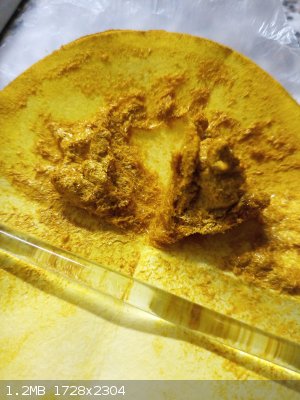
Sheet of filter paper with product removed from Buchner funnel and let to air dry. Weight 6,3 g of wet crude product on wet filter paper, after air
drying at room temperature after 8 hours 3,9 g, after 12 hours = 2,1 g, after 18 hours = 2,1 g. Then when slightly rolling or twisting the filter
paper the product separates from the filter paper as a thin sheet, weight 1,5 g.
It fully dissolved in 50 ml of hot 95% ethanol (denatured with 1% MEK and bitrex). But due to small scale to minimize loses 10 ml of extra ethanol
added and filtered hot, circa such 10 ml ethanol evaporated during the filtration for heating the funnel from its bottom by ethanol vapor when
evaporating from heated receiving flask to boiling temperature.
Something dark brown stayed on filter paper (??? oxidation products like darkening aniline on air ???) with estimated very tiny weight, filtrate clear
dark red. Product crystallizes unwillingly, after cooling to room temperature and then further to +10 C very tiny amount of dust size of crude product
previously saved was introduced and then cooled in fridge at +4 C overnight. Tiny needle shaped yellow crystals separated by filtration and air dried.
Weight 1,0 g.
The 1 L water after filtration on Buchner funnel was quite red, but the solubility of the product in water is IIRC very low - ??? maybe it is possible
to extract some of the product from the water by an extraction with e.g. ethylacetate ???
There are loses due to very small scale, performing at bigger scale should have better yield. I just wanted to try the reaction although I do not have
any usage for the product yet. I found the reaction very cool. I have plenty of commercial 4-nitroanilinine and this is its naphthalene analogue which
is very easy to synthesize. The solubility of 1-nitronaphthalene in alcohol is circa 3-5 times higher than the solubility of the product.
Info gathered from internet: Hydroxylamine hydrochloride is soluble in ethanol, particularly in polar solvents, and often used in organic synthesis.
It shows a solubility of approximately 4,43 g / 100 g in absolute ethanol at 19,75 C. While it dissolves well, it is more soluble in water > 80 g /
100 g and methanol.
all together before starting stirring, 1-nitronaphthalene still undissolved
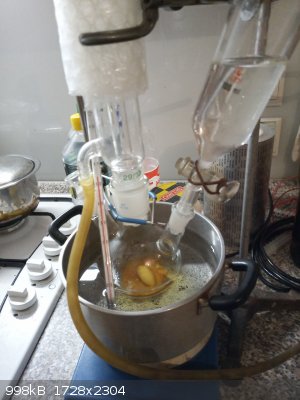
stirring, 1-nitronaphthalene dissolved, hydroxylamine hydrochloride mostly undissolved, the solution still relatively clear
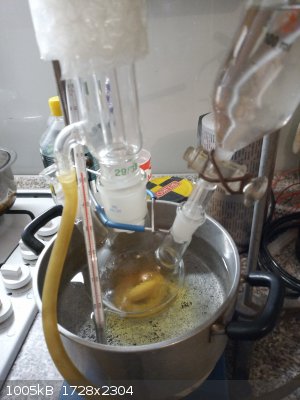
after first drop of methanolic KOH immediately turbidity (stir bar not visible) due to undissolved fine KCl, then more drops and more turbidity due to
KCl
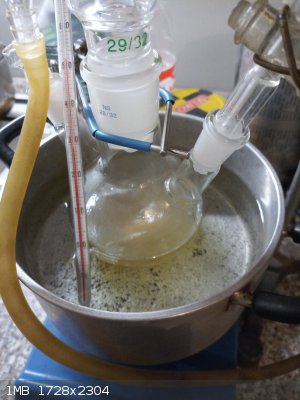 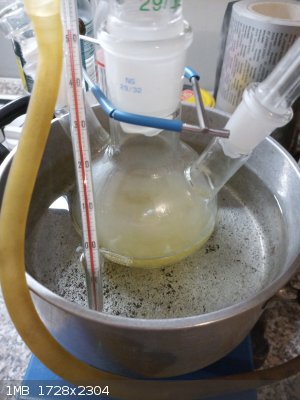 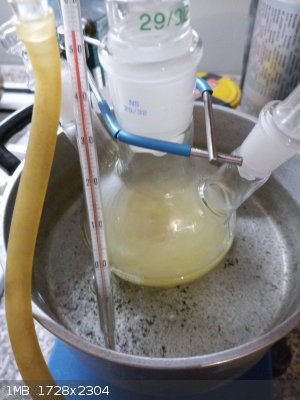
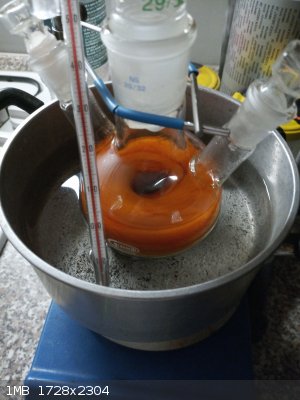
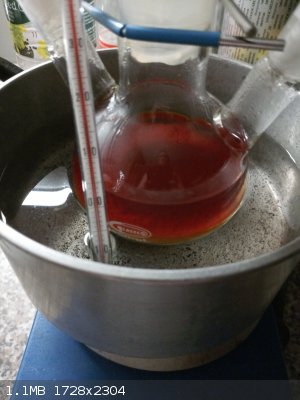
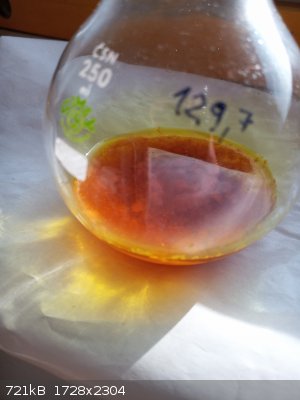
product forming with red color, stirring continued, for seeing the color the stirring temporarily interrupted just to make a photo
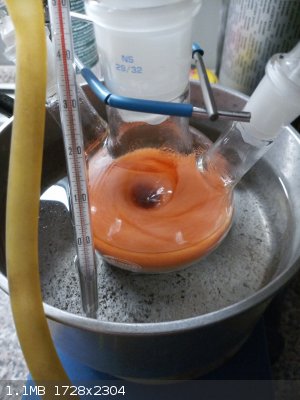 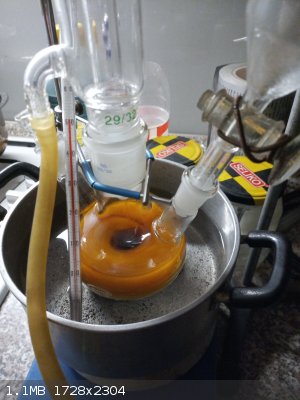 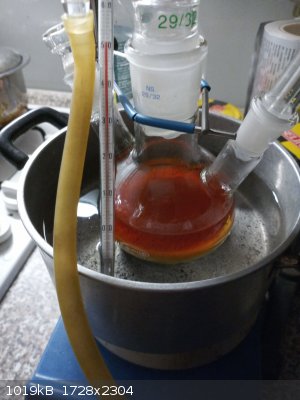  
after pouring into stirring 700 ml of ice+water in large beaker
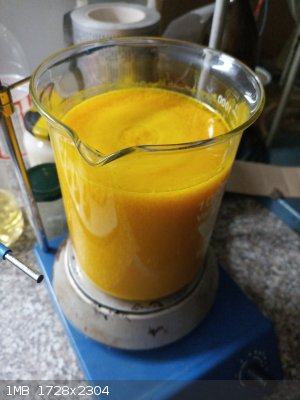
vacuum filtration on Buchner funnel
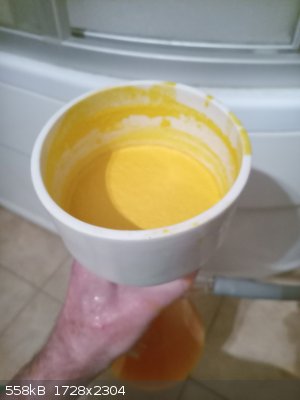
filter paper with product transferred outside of Buchner funnel and let to dry
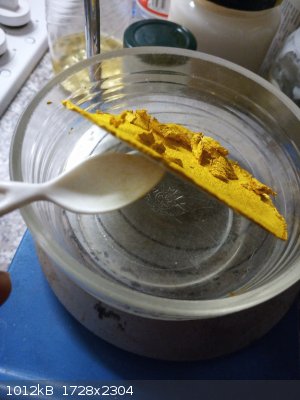 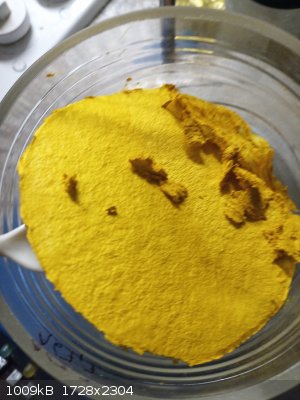
dry product easily separates from filter paper in a form of a sheet
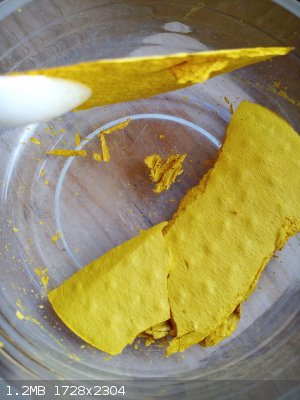
recrystallization from ethanol on wood stove to boil some ethanol and heat the funnel by ethanol vapor to prevent premature crystallization in
filtration apparatus at this small scale, very little of something dark filtered out (very likely some oxidation product of amine??? because active
charcoal was NOT used), filtrate crystal clear
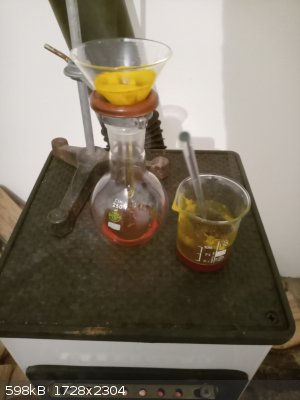 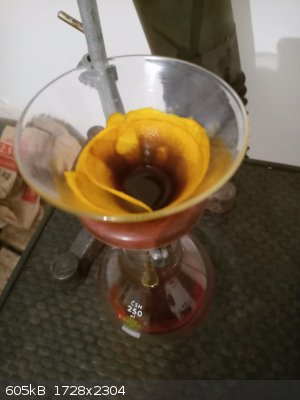 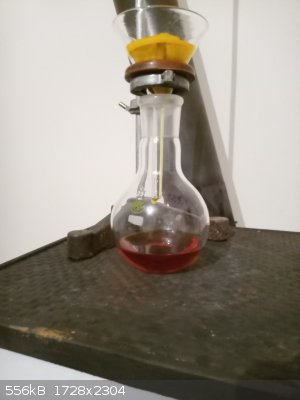 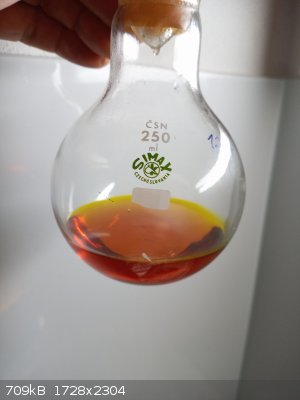
product crystallizes unwillingly and it was necessary to seed the crystallization using a little of dust size amount of the product obtained
previously (crude product after filtration from water)
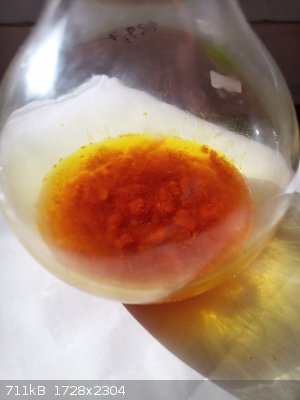  
|


![[*]](images/xpblue/default_icon.gif)


