Altreon
Harmless

Posts: 29
Registered: 11-12-2025
Member Is Offline
Mood: oxidizing
|
|
Mechanism of cathode corrosion in H3PO4/H2SO4?
I have been recently been attempting to synthesize H3PO4•n(HPO3) and H2SO4•nSO3
by electrolysis of the corresponding concentrated acids (85% and 93-98%) using a Pt anode which appears resistant to corrosion . For the cathodes in
sulfuric acid, I've tried, in order of increasing stability, Ag, Ti, Ni, Cu, Mo, W, (Pt) and for phosphoric acid I've tried Ti, W
In conc. sulfuric acid, Ag/Ti dissolve rapidly into a white/purple soln., Ni/Cu form flocculent precipitates that look like metal sulfides and smell
like H2S/SO2, Mo slowly and invisibly corrodes into Mo(blue) above the meniscus, which oxidizes and turns transparent on contact
with the bulk liquid (molybdyl, in analogy to chromyl?) and W very slowly corrodes into a milky solution over a course of days (tungstic acid?)
In conc. phosphoric acid, the Ti surface turns a soft black color, although I couldn't observe any other corrosion due to the soln. turning black from
the C anode, and W works for 12h in 85% 40mL acid, until it gets pulverized into a black powder that oxidizes in air to W(blue), turning the soln.
grey.
I believe the cathode reactions should simply be
2 H3SO4+ --(+2e-)--> 2 H2SO4 + H2 ↑
because of the anomalously high autoionization rate of sulfuric acid, and
2 H4PO4+ --(+2e-)--> 2 H3PO4 + H2 ↑
after all the water is gone, assuming that phosphoric acid autoionizes to the same extent and in the same way as sulfuric acid.
With these reactions, I still have no plausible explanation for the rapid corrosion of these metals. It's strange to me that the cathodic protection
is not enough to reduce the metal salts at the cathodes, especially a metal like Ag (surprising how fast that dissolves compared to Cu), and while
oleum (which should be produced at the anode) is a powerful oxidizer, the corrosion is often a black metal sulfide instead of a sulfate. Phosphoric
acid is even stranger, as it, along with polyphosphoric acid, are non-oxidizing, and the cathode residue from phosphoric acid is a reducing agent/may
be the metal itself. Why does the cathode get destroyed?
Attached images are of a W rod used as a cathode with the Pt electrode in phosphoric acid and sulfuric acid.
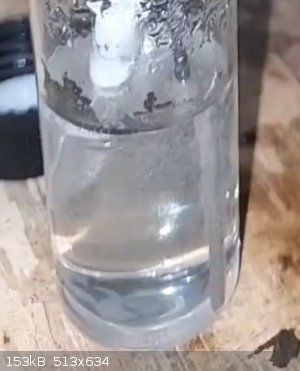 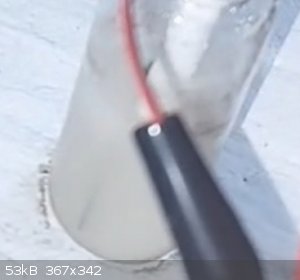
[Edited on 6-1-2026 by Altreon]
|
|
|
Altreon
Harmless
Posts: 29
Registered: 11-12-2025
Member Is Offline
Mood: oxidizing
|
|
After further testing, Ti, Ag, and C are not suitable cathodes for H3PO4. Ti slowly dissolves into a vaguely purplish grey
"solution" with some black dust, which may be a suspension of metallic titanium (on a side note, the peroxotitanyl complex is not nearly as intensely
colored in the electrolyzed H3PO4 as it is in water). Ag very slowly gets coated in a black conductive layer (which may be
Ag3P, as I assume Ag2O reacts with H3PO4) that flakes off to a very small extent, and it turns yellowish
on the areas not covered by H3PO4 (it's quite unusual for silver to react with a non-oxidizing acid at mild temperatures). C (in
the form of smoothened graphite welding electrodes) degrades over a few hours, turning the (reused Ag/H3PO4) solution a clear
but dark grey without any obvious extra precipitate.
So far, Ag is the only cathode that doesn't discolor the solution, and the "Ag3P" chunks are small and very easily separable, making Ag the
toughest electrode so far. I assume that the best cathodes for phosphoric acid follow the standard electrochemical series, as phosphoric acid is
neither a good oxidizer nor a good complexing agent, meaning all metals nobler than Ag would probably work well.
As for H2SO4, graphite seems to be a very stable cathode material. The solution goes through a variety of changes (it has become
cloudy twice and its getting cloudier again) and the C has been coated in a white layer and is currently poorly coated in a yellow layer. I will check
tomorrow if any significant corrosion has occured, as only a few, easily separable but visible chunks of graphite are at the bottom of the vial.
|
|
|
MrDoctor
Hazard to Others
Posts: 249
Registered: 5-7-2022
Member Is Offline
|
|
do you have any other actual graphite to test? if you have an old dead power tool rip the brushes out and try with that, its usually sintered-carbon
iirc, though make sure it doesnt contain undesired binders or lubricants, they should be very pure VERY high density graphite though. im not so sure
carbon gouging rods really are a good representation of graphite, they arent always neccesarily "graphite" either, some use charcoal, waste graphite
powder and a binder, ive been told sugar sometimes, compressed and then carbonized to both cement the rod but also improve conductivity, and coated
with a copper jacket for additional structure and conductivity. its also weird seeing how gouging rods have such a varying grain size compared to
graphite which is formed very differently, but gouging rods only need to make a hot arc and not add to the metals being welded, thats it. One time i
had a peeled 8mm gouging rod crumble after eroding down barely a millimeter.
low density graphite you can grind away with your fingernails imo is next to useless as anode material, and gouging rods i tried were not that far
off. compared to 1.8g/cm3 and 2g/cm3 graphite rods, its night and day.
very different processes and materials are used for different purposes. some are compressed, formed by sublimation, sintering, decomposition of
carbides, glued, pyrolysis of organics, some even are formed by ultrasonic sifting. Some start with carbide, pre-made synthetic graphite, natural
graphite, and some like pencil-lead are just carbon-colored clay.
|
|
|
Altreon
Harmless
Posts: 29
Registered: 11-12-2025
Member Is Offline
Mood: oxidizing
|
|
I am well aware that my "graphite" electrodes aren't truly graphite, as for one, they aren't shiny. I made a mistake, the graphite electrodes I used
were marketed for "electrolysis" instead of welding, and they aren't nearly as brittle as battery graphite for example. I do not have access to my
workspace and any form of power tool, but I will measure the density of the "graphite" at my earliest convenience.
[Edited on 10-1-2026 by Altreon]
|
|
|
Altreon
Harmless
Posts: 29
Registered: 11-12-2025
Member Is Offline
Mood: oxidizing
|
|
The 93% sulfuric acid has decreased by about a 6th in volume. The solution has some floating vaguely greenish particles, the graphite cathode turned
yellow, and smoke is produced for a few seconds when an electrode is removed from the soln. It's clear my graphite electrodes aren't perfect materials
for sulfuric acid electrolysis, but they still produce some oleum.
The majority of the graphite's corrosion seems concentrated on the part touching the meniscus, where the graphite burst. All the graphite submerged in
the acid seems to have swelled, possibly because of some graphene bisulfate forming.
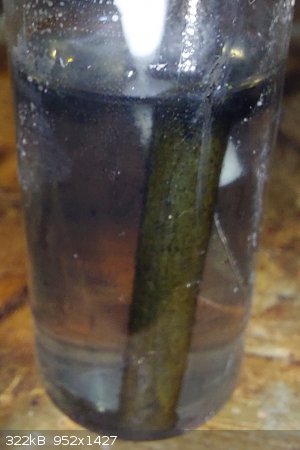 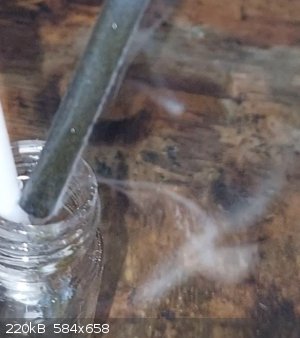 
[Edited on 11-1-2026 by Altreon]
|
|
|
Altreon
Harmless
Posts: 29
Registered: 11-12-2025
Member Is Offline
Mood: oxidizing
|
|
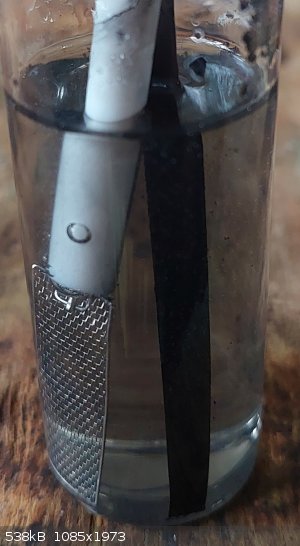
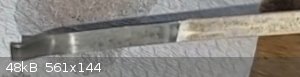
It appears that the black compound formed when Ag is used as the cathode is unstable in storage. The electrode was stored in an opaque box, but any
traces of the black compound converted into a dark grey metallic surface. When used as an electrode for a day, the "Ag3P" seems to form a
suspension, as the layer is flimsy and not all the silver is coated in it. HCl does not ppt. AgCl out of the suspension or the bulk black layer, which
for me is convincing evidence for the black substance being a phosphide of silver that is stabilized by very high lattice energy in analogy to
Ag2S or Ag3N.
Attached images are of the electrolyzed solution and the silver after a few days of being pulled out of the previous elec. soln.
[Edited on 12-1-2026 by Altreon]
|
|
|
Varungh
Hazard to Self
Posts: 70
Registered: 23-6-2025
Location: India
Member Is Offline
Mood: Bad mood
|
|
Have you tried lead? It forms insoluble sulfates in H2SO4.i doubt it will corrode. Then again silver corrosion was surprising as well. Try being
ginger with your electrolysis. Maybe the high power is pulverizing the cathodes
|
|
|
Varungh
Hazard to Self
Posts: 70
Registered: 23-6-2025
Location: India
Member Is Offline
Mood: Bad mood
|
|
If that is silver phosphide, we may very well have found a diy way of making phosphides here.
|
|
|
Altreon
Harmless
Posts: 29
Registered: 11-12-2025
Member Is Offline
Mood: oxidizing
|
|
Quote: Originally posted by Varungh  | | Have you tried lead? It forms insoluble sulfates in H2SO4.i doubt it will corrode. Then again silver corrosion was surprising as well. Try being
ginger with your electrolysis. Maybe the high power is pulverizing the cathodes |
I tried lead a few days ago: It just becomes lead sulfate. I didn't continue the electrolysis very long (cuz, yk, lead) but there was immediately a
very opaque viscous milk forming around the lead cathode. I have yet to try lead in phosphoric acid.
I also tried Zr, which produced a very small amount of dense white granules after an hour or two. It also continues bubbling without current, meaning
Zr dissolves in conc. H2SO4 like Ti. When I stopped electrolysis, the rod had a very foul smelling black layer that was washed
away to a dark grey layer (ZrS2?). The new stability ranking is Ag, Pb, Ti, Ni, Cu, Zr, Mo, W | Pt
As for power, I believe my USB alligator clips plugged into an outlet give somewhere around 5V 2A, although I vaguely recall them giving 120V on a
multimeter. They are my weakest power supply in terms of amps, which I always assumed is what causes the corrosion instead of voltage.
[Edited on 28-2-2026 by Altreon]
|
|
|
teodor
International Hazard
Posts: 1167
Registered: 28-6-2019
Location: Netherlands
Member Is Online
|
|
Hm, I never heard about getting oleum by H2SO4 electrolysis.
But the topic of H2SO4 electrolysis to persulfuric acid was discussed recently, the book I shared in the "getting H2O2 by electrolysis" thread
contains everything about electrodes. If I recall it properly , Tantalum electrodes have good ability to witstand corrosion in that process. I can
check but I am not sure we are talking about the same process. Could you put a bit more light on that chemistry which turns H2SO4 into H2SO4 * nSO3?
|
|
|
|



![[*]](images/xpblue/default_icon.gif)


